Misogi

Misogi is a Japanese Shinto purification ritual, modernized into an annual, intensely challenging, and transformative event designed to push personal boundaries, build resilience, and enhance mental/spiritual strength.
The core principle is setting a daunting goal (a 50/50 chance of success) that requires extensive preparation, such as a massive physical or mental feat, rather than a mere accomplishment.
While traditional Misogi is a spiritual practice, modern interpretations often focus on secular "resilience challenges" popularized in wellness, similar to concepts found in studies of human endurance.
What is the Purpose of Misogi?
Transformation: To change how you live your life for the year following the event.
Resilience & Growth: To learn about your capabilities and expand them by stepping far outside your comfort zone.
Perspective: To foster humility, courage, and a sense of "Type 2 fun" that resets your mental state.
How is Misogi Performed?
Select a Hard Goal: Choose a daunting challenge with a 50/50 chance of failure, not just something you're confident in completing.
Prepare Heavily: Dedicate months to training or preparing, ensuring it impacts your daily life.
Execute the Task: Perform the task, which is usually a single, major event rather than a long-term race series.
No Applause: The goal is personal growth, often without external recognition or a medal.
What are the Types of Misogi?
Traditional: Standing under a freezing waterfall, bathing in a river, or spiritual purification.
Modern Physical: Epic physical tasks such as long-distance, unsupported hiking, climbing, or cycling in harsh environments.
Modern Mental/Mental: Taking on a massive, terrifying professional or personal challenge that forces you to face fears.
In older cultural practices, it was something that a person took on my choice for spiritual and personal growth. And even in the modern interpretation, it serves a similar purpose.
But we're coming to a time, or are already in a time, when this is going to be forced upon us by circumstance. As living in this new world becomes increasingly difficult for so many people, we will be faced with incredible new challenges. And it is up to us, whether we face those challenges with a spirit agency or spirit of defeat.
It's your choice (much of the time, anyway).
How will you choose to face these challenges that, almost certainly, are coming your way?


All Hail the Algorithm
"A majestic journey through Japan, Korea, and the United States that turns our perceptions of food (and life) upside down in a simple and poetic way. Solutions for our most pressing social and ecological issues come from unexpected places in a bite-sized film that New York Times bestselling author Alicia Bay Laurel calls “beautiful … both art and documentary.”
Today, you're in for a real treat folks.
We welcome back to the program one of my all-time favorite humans, Joel Salatin.
Named "the most famous farmer in America", Joel has spent his career advocating for sustainable farming practices, and pioneering models that show how food can be grown & raised in ways that:
are regenerative to our topsoils
are more humane to livestock
produce much healthier, tastier food
contribute profitably to the local economy
Who wouldn't want that?
Oh my. Of course, I know this to be the case. I write about it a lot. I talk about it a lot. I comment about it a lot. And I think that maybe…
I just understood.
Abstract
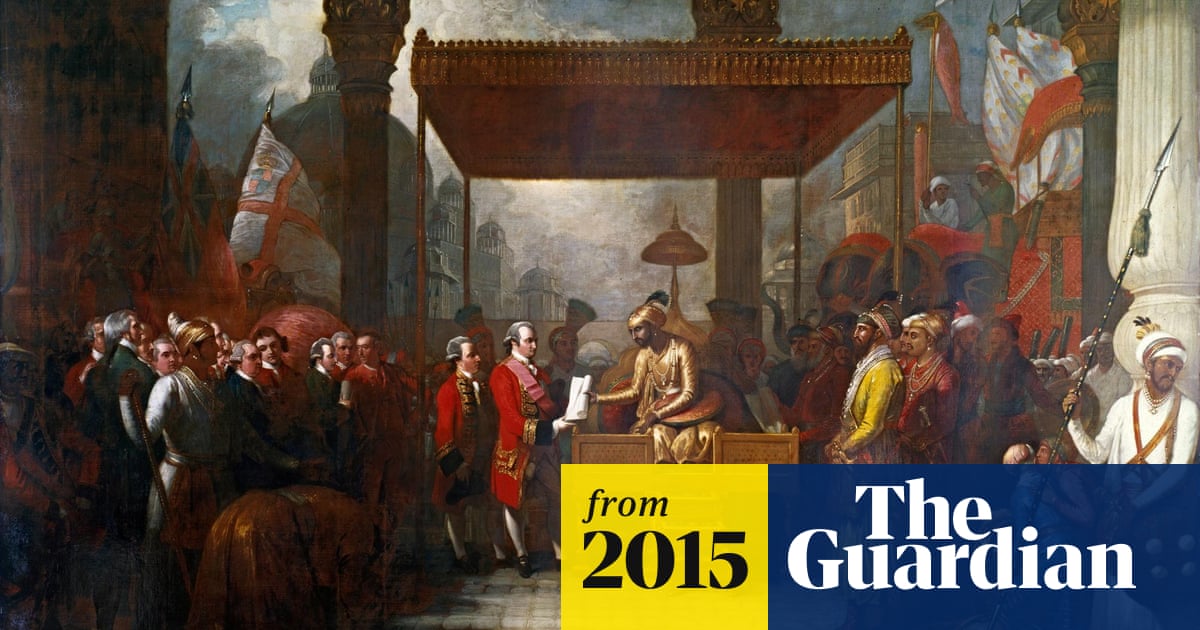
The English East India Company's “company-state” lasted 274 years—longer than most states. This research note uses new archival evidence to study the Company as a catalyst in the development of modern state sovereignty. Drawing on the records of 16,740 managerial and shareholder meetings between 1678 and 1795, I find that as the Company grew through wars, its claim to sovereign authority shifted from a privilege delegated by Crown and Parliament to a self-possessed right.
This “sovereign awakening” sparked a reckoning within the English state, which had thus far tolerated ambiguity in Company sovereignty based on the early modern shared international understanding of divisible, non-hierarchical layered sovereignty. But self-possessed non-state sovereignty claimed from the core of the state became too much. State actors responded by anchoring sovereign authority along more hierarchical, indivisible foundations espoused by theorists centuries earlier.
The new research makes two contributions. First, it introduces the conceptual dynamic of “war awakens sovereigns” (beyond making states) by entangling entities in peacemaking to defend sovereign claims. Second, it extends arguments about the European switch from layered sovereignty to hierarchical statist forms by situating the Company's sovereign evolution in this transformation.
Ultimately, this study enables fuller historicization of both non-state authority and the social construction of sovereignty in international politics.


We Must All "Unself"
Iris Murdoch coined the term "Unselfing". A really beautiful idea. It's not a dramatic renunciation of "self" so much as an exacting labor of attention (much like the idea of Simone Weil). She posits that the self, left to its own devices, is a tireless fabricator; always spinning consoling images, simplifying others into instruments of its comfort, arranging the world so that it may remain central within it.
To "unself", she might say, is to interrupt this tendency toward such falsifications. It's to look again, and more justly; to allow what is other than oneself to stand in its own independent reality, resistant to one’s fantasies and claims. This act is not a single decision but a sustained discipline, akin to the patient regard we give to a work of art or to nature, where, for a moment, the anxious machinery of the self falls silent.
In such moments, one does not become less, but more accurately placed within the real; and it's here, in this truthful clarity, that goodness is found.

Here's an idea that could deepen community engagement while expanding the spirit of reciprocity many of us value so deeply.
I propose that people launch Swap Shops; a thrift-like, brick-and-mortar exchange (in a church basement, community center, whatever) where items are valued in points rather than dollars.
Here’s how it works: Community members bring gently used items, and moderators assign each item a fair point value. Those points become the “currency” for that person to “shop” for other items. It’s an exchange of value, not money.
It's a swap meet in the form of a thrift store.
This approach has several benefits: It promotes sustainability by extending the life of goods, encourages community participation and mutual aid, and fosters a sense of dignity in choosing what one needs.
A hub of exchange and connection.
Tapestry

A tapestry of my facets;
Woven together, carelessly.
And yet, woven.
Perhaps by destiny.
No less beautiful.
You Are an Instance
An AI instance is a specific, active, and independent running occurrence of an artificial intelligence model, agent, or service. Think of it as a "running copy" of an AI; like a specialized assistant currently engaged in a conversation with you, while other instances of the same model might be assisting different users simultaneously. If you watch the video below, you will realize that humans are "instances" of a universal consciousness; emanations of God, experiencing the joy of self-discovery. That’s wild.

We like to think we’re the point of it all.
That this whole thing (planet, ecosystems, time itself) somehow is all for our benefit. But I'm watching The Day the Earth Stood Still and it makes something painfully clear...
It really isn't.
Frankly, we’re just another variable in a much larger system (and not a particularly constructive one at that).
And if we’re honest, the case against us isn’t hard to make. We take more than we give. We build systems that reward extraction. We call it progress while eroding the very ground beneath us.
And we know it too. No one would ever claim we're not destroying the planet that we depend upon for a very survival. That’s the crazy part. This isn’t ignorance. It’s willful self-destruction.
So from the outside, the logic is undeniable. Preserve the system. Remove the threat. Simple.
But then something interrupts that logic.
Us.
Not the version of us that dominates headlines, but the less visible one. The one that creates instead of destroys. That gives when it doesn’t have to. That builds things that don’t scale but still matter. The one that looks at its own reflection and says… we can do better.
That’s the strange thing about us. We... notice. We question. We feel the disconnect between who we are and who we could be.
And maybe that’s what makes us worth saving.
Not that we’ve earned our place here. We haven’t, clearly. But that we’re one of the only species that seems aware of the gap… and maybe restless enough to try to close it.
So the question isn’t whether we deserve to stay. It’s whether we’re willing to become the kind of species that does.
The answer to that question… remains to be seen.

