This book is really about that strange place we all feel we're in, but don’t quite have language for… the in-between.
The part where the old world has clearly stopped working, but the new one hasn’t shown up yet.
Jitske Kramer calls this the “messy middle,” and she leans on anthropology to say: "this isn’t new, this is human". Every culture, every era, goes through these liminal stretches where the rules loosen, identities blur, and people start reaching for certainty wherever they can find it.
And what happens in that space? We get uncomfortable. We grab onto simple stories. We elevate loud voices and “tricksters” who sound confident, even if they’re not grounded in truth.
Power shifts. Narratives compete. Everything feels unstable. But underneath all of that chaos, there’s also possibility… because when the structure breaks, so does the illusion that it was permanent in the first place. That crack is where something new can actually be built.
But she always circles back to the crucial point… you don’t get transformation just by hanging out in the chaos. A lot of people get stuck there. Endless transition. Endless talk. Endless “almost.” She warns about that drift… this idea of permanent liminality, where nothing ever resolves and nothing actually changes.
The work is to move through it. To sit in the discomfort long enough to understand it, but not so long that you lose the will to act.
And that takes something we’re not very good at right now… patience, honesty, and a willingness to not have clean answers.
And maybe the most grounded takeaway is this: we’re not uniquely lost. It just feels that way. Humans have always gone through these periods where the map stops making sense. The difference is whether we try to rush out of it with false certainty… or whether we slow down, pay attention, have real conversations, and actually participate in shaping what comes next.
It’s sort of like a field guide for being human in uncertain times… reminding you that feeling disoriented isn’t failure, it’s the signal that something real is shifting.
“We built a world that ran on money… and forgot how to live in relationships.”
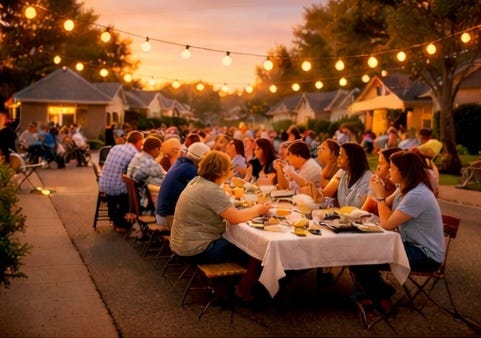
“When we stopped knowing our neighbors… we started needing them more than ever. We just hadn't realized it yet."
“When everything is transactional, meaning is lost; because, meaning can't be purchased... It's shared"
RIVER
Liminal Space
The word liminal is often heard lately. Youtube videos. Substack essays. It describes a state of being in between… not where you were, but not quite where you’re going either. A doorway. A crossing. The moment after something has ended, but before the next thing has fully begun.
Liminal spaces can be things like: An empty hallway late at night. The last day before a big life change. That strange emotional space after a loss… or even after a success.
Waiting rooms. Airports at 3 a.m.
These "spaces" often feel a little disorienting. Sometimes eerie. Sometimes sacred. Because the usual rules don’t quite apply there. One's sense of contrived identity loosens. Certainty fades. And for a moment, things feel open… unsettled. Almost peaceful and refreshingly undefined.
But they're not always just uncomfortable… sometimes they’re also creative.
Transformation happens there. You’re not locked into what you were, and not yet constrained by what you’ll become. It’s unstable… but also full of possibility.
Most people try to rush through it. Get to the next “solid” thing as quickly as possible. But if you stay there for a minute… there’s something. Something freeing. A feeling that you're free from all of societies expectations and demands. Free from your own expectations and demands. It's an empty space that is honest. Truly and purely honest. No narrative. No spin. No social contract.
Just beingness.
A kind of recalibration. Not quite this. Not quite that.
But something... new.
It’s Easier to Give In… Right?
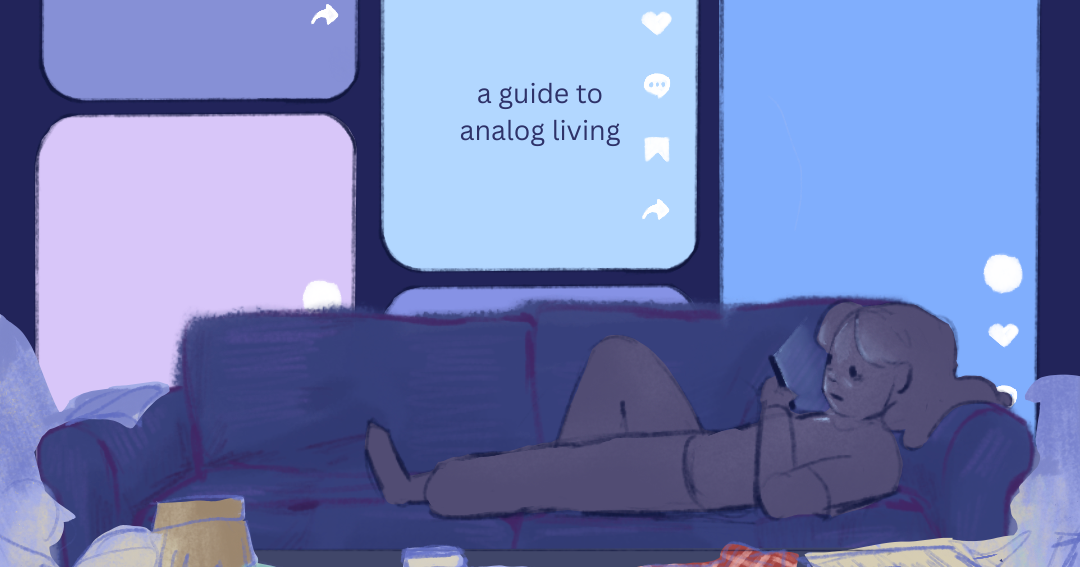
The modern world does not so much coerce as it coaxes. It hums, it glows, it entertains itself into submission.
Where once the individual feared the lash or the edict, he now fears silence… the absence of stimulation, the dreadful possibility of being left alone with his own thoughts. We have, with remarkable efficiency, engineered a society in which discomfort is anesthetized before it can ripen into reflection.
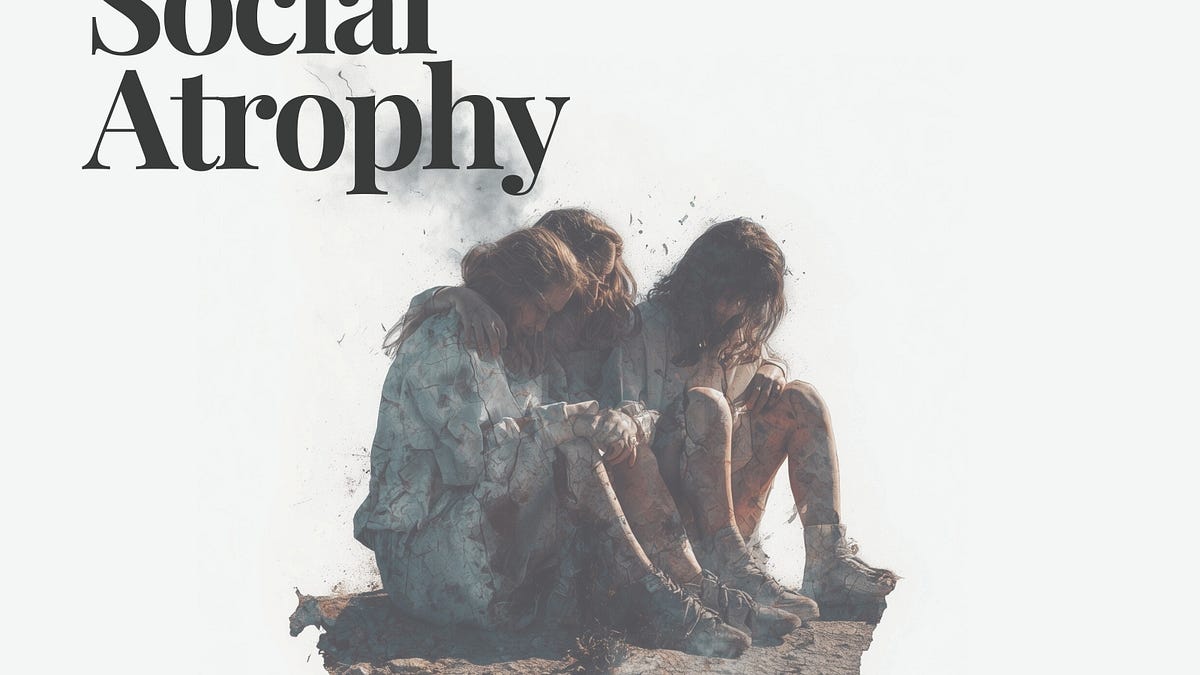
The citizen is not imprisoned but pacified, not silenced but saturated. And in this saturation, something curious occurs: the capacity for genuine longing, for truth-seeking, begins to atrophy. For why seek, when everything is already presented? Why question, when the answers arrive prepackaged, polished, and pleasantly agreeable?
And so we drift… not into tyranny as it was once known, but into a softer, more insidious condition. A world in which freedom is preserved in form, yet quietly eroded in substance.
Choice abounds, yet meaning grows scarce.
The individual, convinced of his autonomy, becomes instead a curator of distractions, mistaking preference for agency. What is most alarming is not that we are controlled, but that we have come to prefer it this way.
For in the end, the most stable societies are not those that crush dissent, but those that render it unnecessary… where the appetite for truth is replaced entirely by the comfort of illusion.
Death by 1000 Cuts
Incessant pain that holds your attention. You can think of nothing else. It holds you in the now of suffering. Blood loss, yes. But more so, loss of the will to keep enduring.
We can endure any how, as long as we have a why. But when the why is gone, that thing which holds the soul tethered to this world is let loose. Willingly. With relief.
The cuts keep coming.
We must hang onto the why.
What is your why?

.png)
In many traditional cultures, wealth was not something that accumulated. It moved. It circulated. It lived in that wonderful space between people; not inside boxes buried in the backyard, or deeds, or notes, or accounts.
The Potlatch understood this. The Kula ring understood this. You didn’t become significant by holding more… you became known and valued by giving more. By participating in the flow of human networks and relationships.
Status wasn’t a matter of accumulation, it was about recognition, respect, and trust. A social memory that said, “this person shows up… this person contributes… this person can be trusted.”
And that’s the thing we've been losing. We stopped the flow. We turned living systems of reciprocity into static systems of storage. And in so doing, we made wealth visible… but meaning invisible.
What’s interesting is that both Potlatch and Kula weren’t just cultural quirks. They were functioning economies. Not economies of extraction, but economies of relationship.
You gave, not because you had excess, but because giving was the system itself. It created bonds. It reinforced roles. It built a kind of a distributed social ecosystem where value didn’t sit in one place long enough to become power over others.
And that's a smart way to do it. An understanding that when value moves, communities become stronger... and when it pools, they break apart. Social capital wasn’t a buzzword in these systems. It was a living currency. Not tracked in numbers, but carried in reputation, in story, in the collective knowing of a people.
And it seems, that’s where we should be heading again. Not backward, but back into alignment.
Because when systems start to fail, people don’t reach for abstractions… they reach for each other. They look to the things that have always had value. Trust. Reciprocity. Contribution. The things that actually hold.
What we're (re)building and promoting isn't something new. It just feels new because we’ve been away from it for so long. But the idea is ancient. Make contribution visible. Let value move. And let reputation… not accumulation… be the thing that endures.
Cheers, friends.