Ikigai (生き甲斐) is a Japanese concept that roughly translates to “reason for being” or “the thing that makes life worth living.” It’s the answer to the question: Why do you get out of bed in the morning?
In the West, ikigai is often illustrated as the intersection of four things
What you love (passion)
What you’re good at (talent)
What the world needs (mission)
What you can be paid for (vocation)
Where these overlap is said to be your ikigai; a place where meaning, contribution, skill, and livelihood align.
Interestingly, this neat Venn-diagram version is actually a modern interpretation, not exactly how the concept traditionally appears in Japan.
But I think it works really well in our modern society.
The idea of “social soil” comes from thinking about communities the same way we think about ecosystems.
Just as plants don’t grow in isolation, healthy societies don’t grow in isolation either. They grow out of the conditions around them; trust, reciprocity, shared norms, mutual care, and a sense that people belong to something larger than themselves. Those conditions are the soil.
If the soil is healthy, good things grow naturally. If the soil is depleted, even the best seeds struggle.
In modern societies, a lot of our social soil has been eroded. Mobility, digital life, hyper-individualism, and transactional economics have weakened the everyday relationships that once held communities together. People are more connected technologically than ever, but socially nutrient-poor.
And from this whole metaphor, the idea of social farmers and social gardeners becomes interesting.
A social farmer focuses on the large conditions of a community. They cultivate the soil itself. They create systems and institutions that encourage trust and cooperation; things like time banks, mutual aid networks, food rescue programs, volunteer structures, and community hubs. These are the people improving the fertility of the social ecosystem.
A social gardener, on the other hand, works at the small and personal scale. They plant seeds of connection. They introduce neighbors. They organize potlucks, book clubs, and volunteer days. They mentor, encourage, and nurture relationships.
Farmers prepare the land and gardeners tend the plants. But both are doing the same deeper work: growing social capital.
And this is exactly why the concept matters right now. If we want stronger communities, we can’t just focus on solving isolated problems. We have to rebuild the conditions that allow healthy communities to grow in the first place.
In other words, instead of trying to manufacture outcomes… we start regenerating the soil.
And once the soil is healthy again, the rest tends to grow on its own.
It’s slow work.
But cultivating rich soil always is.


“When the dream becomes material rather than moral, it inevitably becomes empty.”

Many philosophers read The Great Gatsby as an existential novel because it subtly explores what happens when a person tries to construct meaning in a world that offers none automatically.
Human beings are born into an existence that does not arrive with built-in purpose or meaning. We exist first. Then we create who we are through the way we live. A human being simply appears in the world, and only later defines themselves through choices, actions, and commitments.
Who have you created through your choices, actions, and commitments? In short, who are you and... is it meaningful?
History has a rhythm. Ancient cultures understood that better than we do. But even to us, the rhythm is becoming obvious—if we’re willing to look. That’s the basic idea behind The Fourth Turning by William Strauss and Neil Howe.
They argue that societies move through long cycles (roughly eighty or ninety years), each ending in a crisis period they call a “Fourth Turning.” A time when institutions break down, old assumptions fail, and the culture is forced to rebuild itself.
The pattern is fairly clear. The 1850s gave us the tensions that erupted into the American Civil War. The 1930s were the crucible of the Great Depression and ultimately World War II. Periods when the system simply couldn’t keep running the way it had been.
And the theory appears to be holding true; we’re already inside our own generation’s Fourth Turning.
Institutions have lost legitimacy. Trust is evaporating. The economic model is crumbling. Politics has become tribal. The old order has clearly reached its expiration date.
Unfortunately, Fourth Turnings don’t drift quietly to their conclusion. They resolve through intense pressure. Through conflict. Through the forced rebuilding of systems that no longer function.
Which means the next few years will almost certainly be rough. But historically, these periods have also produced renewal on the other side. The crisis breaks things… and then, slowly, a new system begins to emerge from the rubble.
What kind of systems are we preparing to create once the dust settles?
Hopefully we’ll have enough sense to do better than we’ve done in the past.
So join us in creating something better. You’ll be glad you did.
There's an absurd contradictions in modern life: grocery stores and restaurants throw away mountains of food while people in the same neighborhoods go to bed hungry.
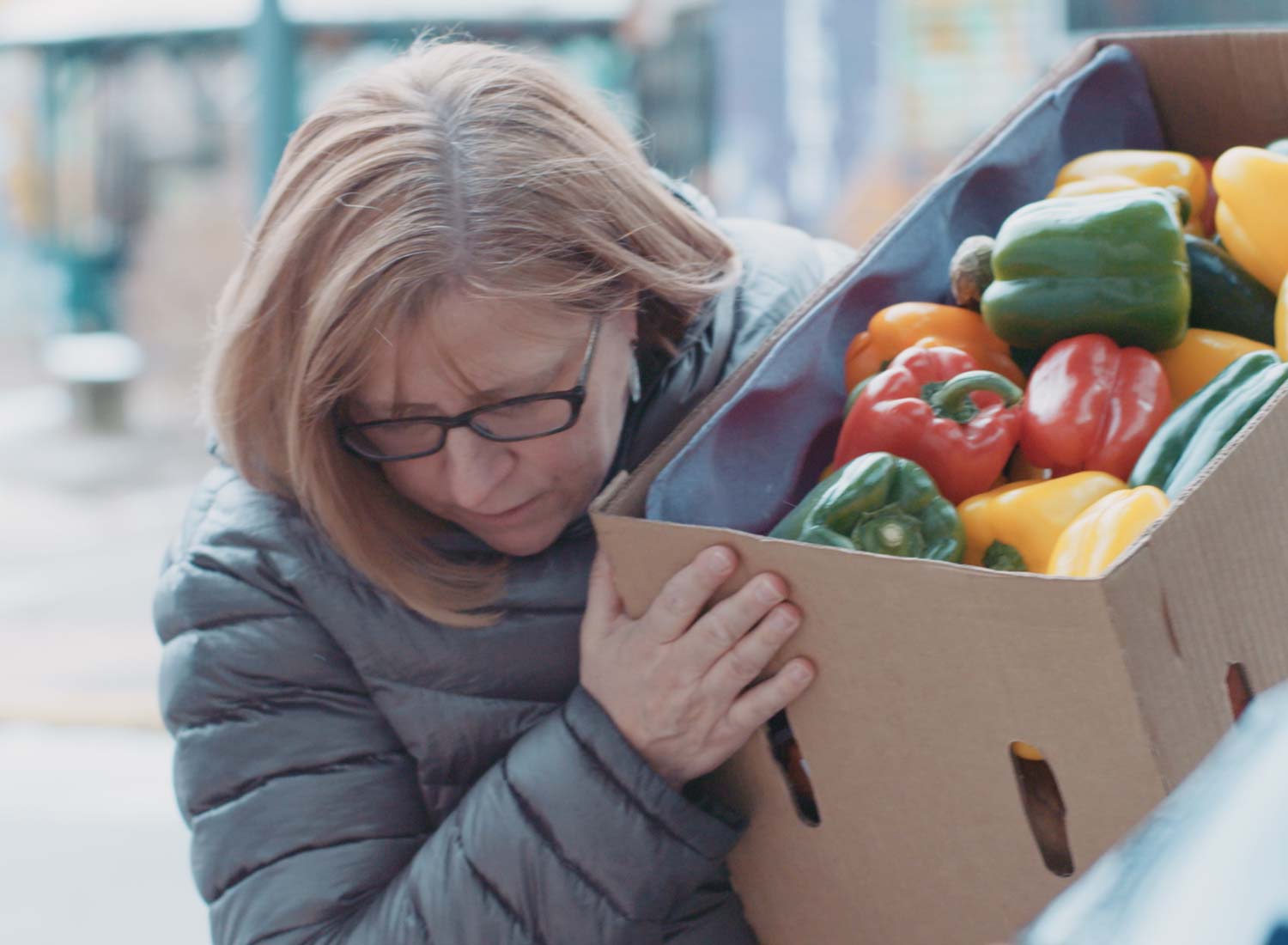
Perfectly good bread tossed because it’s a day old. Produce discarded because it’s slightly misshapen. Prepared food from restaurants and events crammed into trash bags at the end of the night.
Meanwhile, families line up at food pantries hoping there will be enough left when it’s their turn.
Food rescue is one answer to this contradiction and offers a simple, almost obvious solution. Instead of letting surplus food become waste, communities can redirect it to the people who need it.
Restaurants, grocery stores, bakeries, and farms all produce excess food every day - and most of it gets sent to the landfill. But with a coordinated food rescue effort, food can move quickly from surplus to supper tables.
The beauty of food rescue is that everyone benefits. Businesses reduce waste. Food production systems are less stressed. Community organizations are less burdened. Community members build stronger connections with their neighbors. Families gain access to nutritious food.
And communities learn that abundance already exists; it’s just poorly distributed.
Society often frames scarcity as inevitable, but food rescue paints another picture: we don’t necessarily need more food. Sometimes we simply need better systems, and a little more cooperation, to share what we already have.



How to Make Real Change
Once a system begins to reward the right behaviors, you no longer have to push very hard. People start moving in that direction on their own.
Real social change rarely begins with bigger budgets or more passionate arguments; it begins deeper in the architecture of the system itself.
The first step is shifting the underlying story, the paradigm, from competition and extraction toward cooperation, dignity, and shared well-being. Once the mindset begins to change, the goal of the system can change with it, moving from maximizing growth or efficiency to maximizing human flourishing and community.
From there, the rules and incentives must be redesigned so that helping, contributing, and building trust are rewarded rather than ignored.
Information flows then reinforce the shift: transparency, recognition, and visibility allow people to see cooperation happening and then, they want to become a part of it.
When these elements align, positive feedback loops begin to form... where small acts of participation generate trust, trust generates collaboration, and collaboration generates momentum.
At that point the system no longer requires constant force to move it forward; it begins to reorganize itself around the new values.
That's where real transformation can happen — not by forcing people to behave differently, but by designing systems where the best parts of human nature become the easiest path to follow.
Leadership is not about forcing people to do something. It's about inspiring them to want to.
“Dreams can inspire us, but illusions can destroy us.”
Here’s How I See It
A meaningful life is built from commitment. The people who end up shaping their own lives—and often the lives around them—are the ones who refuse to just coast. They choose something. They risk something. They relentlessly pursue the things that matter to them.
Passion gives life texture. Commitment gives it depth.
Without those, a person will drift. Comfortable perhaps, but ultimately unchanged, leaving little behind.
But when someone throws themselves fully into a purpose, they become the kind of person who creates meaning. The kind of person who makes a difference. They become interesting. Magnetic. Alive.
They’ve shown up fully to their own life.
And that is how impact happens. A person who is fully engaged in their life doesn’t just improve their own story—they add weight and substance to the world around them.
Others Have Excuses, I Have My Reasons Why
The progressive bluegrass band Nickel Creek released a song 25 years ago with a line that I’ve always found fascinating:
“Others have excuses, I have my reasons why.”
And I think it can be taken two ways. Google’s AI takes the position: The line highlights a distinction between making flimsy justifications (excuses) and having legitimate, deeper explanations for one’s actions or failures.
I, on the other hand, have always looked at it this way: We tend to think that other people’s “reasons why” are excuses, while our “excuses” are reasons why.
I think we frequently want to justify our behaviors rather than take an honest, and often painful, look at what really motivates them. But self-understanding is one of the most important aspects of wisdom.
So… do you have "excuses", or "reasons why"?
Probably a combination of the two, but it's important to take an honest look at this question.