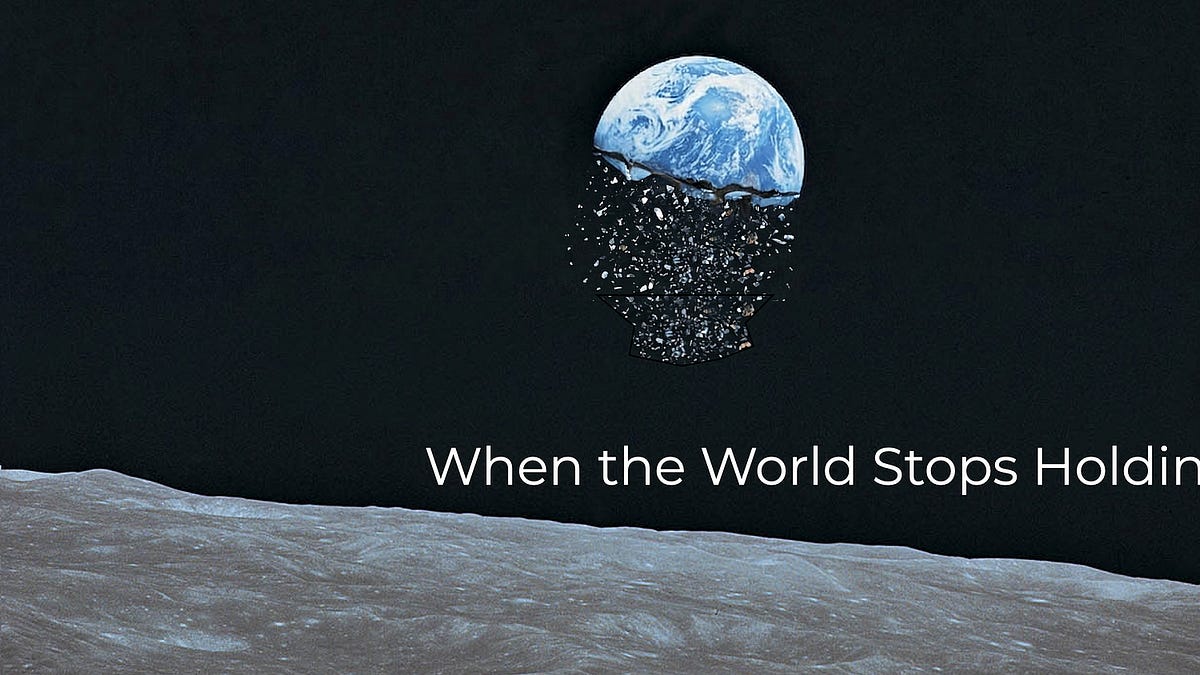
Hard Times Are Getting Harder
People are either already excluded from the economy or getting pushed out. Jobs are harder to get. Harder to keep. It's harder and harder to pay the rent, buy enough food, have enough gas to get where you need to go – if you can even afford a car.
The old way of thinking about "getting by" is quickly becoming irrelevant.
It's a new world. A new economy. And it's time that we had a new way of seeing our place in it.



If You Know, You Know
Everyone needs an identity, right? Especially when we don’t know who we are.
When someone doesn’t truly know themselves, then they look for external qualifiers to define who they must be. I mean, if I don’t know who I am, maybe society can tell me.
I’m a doctor. I’m a lawyer. I’m a philanthropist. I’m a mechanic. I’m a priest. I’m a mother. I’m a Buddhist. I’m a Canadian. Etc.
But what I've found interesting, in my long life, is that the more you get to know yourself, the more you come to know who you really are. You find that you no longer need those labels that come from outside of yourself.
And eventually, you don’t need a label at all.
Because when you know, you know.
Quote by Denzel Washington: “It’s not about what you have or even what you’ve accomplished. It’s about what you’ve done.”
Gerard vs Centola; and how they work together
Many of us don’t actually come up with our own ideas and desires; we borrow them. We see what others value and we start valuing it too. That’s the idea behind René Girard's mimetic theory. But Damon Centola adds something important: it doesn’t really stick unless it’s reinforced.
One person modeling something different might catch your attention, but a small group living it out together? That’s when it starts to seem like a real option. That’s when it becomes potentially "contagious" (to borrow Centola’s language).
Society and culture are shaped by what we see people around us consistently choosing. Together. Over time.
This tells us that changing a community isn’t just about convincing people of something new; it’s about making a different kind of desire visible, and then surrounding it with enough people that it starts to feel like the obvious choice.
As I always say, "beat a drum, build a tribe, start a movement".
What's the difference between working smarter and convenience?
“Work smarter, not harder” is about intentional efficiency. It assumes the work matters. The goal matters. You’re not trying to avoid effort; you’re trying to apply it well.
It’s the difference between swinging wildly with a dull axe and pausing long enough to sharpen it. The effort is still there, but it’s focused, thoughtful, leveraged. There’s a kind of discipline to it.
Convenience culture, on the other hand, is about removing effort wherever possible.
Not just unnecessary effort; all effort. It doesn’t ask whether the effort is meaningful; it just asks how quickly it can be bypassed.
And over time, that starts to reshape us. We get used to not waiting, not struggling, not engaging deeply. Everything becomes faster and easier… even the things that probably shouldn’t be.
One still respects the process. The other slowly forgets why the process mattered in the first place.
You can feel it in real life. A craftsman finding a better technique still cares about the craft. Someone ordering everything through an app starts to lose touch with how anything works at all.
That’s the defining line between the two.
One makes you sharper. The other makes life smoother… but sometimes at the cost of becoming a little duller yourself.
And the trick, I think, is knowing which efforts are a waste… and which efforts actually help to form who you are.